The Ascentador Questionnaire has its origins in the 19th century parlor game popularized by French writer and philosopher, Marcel Proust. This updated instrument is designed to evoke insights from senior executives to the benefit of our readers and contacts around the world.
Paul Carr
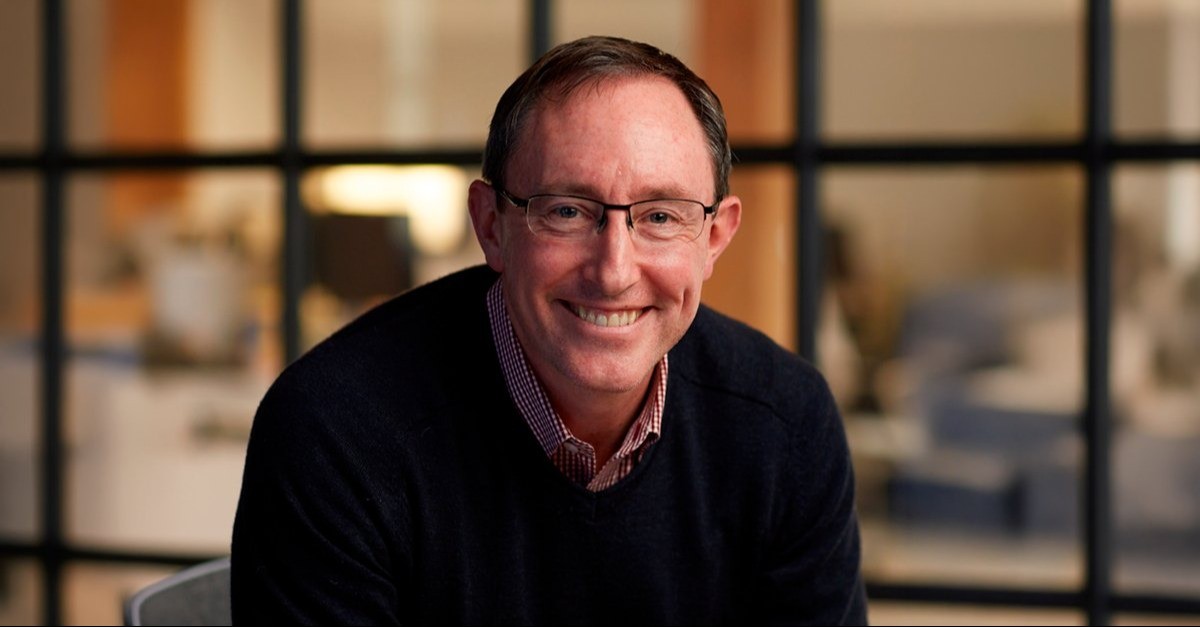
Paul Carr’s career spans four decades in management consulting, research, investment, financial services, and law. Across all these sectors, Paul has distinguished himself as a serial leader of growth businesses, most recently for Welo Global, a leader in the AI-enabled language services industry. Previously, Paul grew and scaled Third Bridge, a leader in institutional investment research, and Axiom Law, the pioneering and leading alternative legal service provider. Before that, he ran a global insurance business at American Express and was a partner at Boston Consulting Group. Paul holds an MBA from Melbourne Business School and a BSc (Hons) from the University of Melbourne, Australia.
His responses to The Ascentador Questionnaire reflect a relentless curiosity, a profound appetite for exploration, and a determination to think deeply about both businesses and people, moving well past the surface. We are honored to share his perspectives, which are provocative, inspiring, and catalytic.
The Ascentador Questionnaire
1. What core value has been most central to your success?
Persistence.
2. What qualities do you prize most highly in your colleagues?
I look for curiosity, persistence, pragmatism and what is called ‘high-resolution thinking.’ People who are drawn to the big questions, with a strong bias for action, a desire to jump in with both feet, who are prepared to challenge every assumption and to engage in concentrated, detailed exploration of the real questions — these are the people with whom I want to surround myself.
3. For what attribute or achievement do you most often hear praise?
Ability to zoom in and out.
4. For what attribute or decision do you most often fault yourself?
Not following my intuition. I was trained as a scientist with a focus on rational, analytical thinking. This natural tendency was strengthened in my early career at BCG. Later, as a leader, waiting for full data before deciding led me to miss opportunities, especially in my dealings with people. Learning to blend the two styles was foundational to my success as a leader.
5. Who are your real-life role models?
The people that come to mind are Elon Musk, Scott Galloway, Sam Harris. Although I recognize that these are provocative figures in some ways, what I admire is their tenacity in challenging pre-existing assumptions, the clarity and logic of their arguments, and the courage to follow where the facts lead, even in the face of difficult pushback from others. They embody what I mean by ‘high-resolution thinking.’
6. What words or phrases do you most overuse?
“Wait” and “onward”.
7. For what fault in others do you have the least tolerance?
Laziness.
8. What was the most important experience of your formative years?
Talking my way into Accenture from being a research scientist, which set me on the path to pursue a career in business.
9. What was the first job you ever held and what did it teach you?
Mowing lawns, stocking supermarket shelves, delivering pizzas. These all taught me that earning money is hard work.
10. Is your work more challenging now or when you were first starting out?
I think there are challenges at every stage of a career.
11. In what area of business have you had the greatest impact?
Growing private equity-backed businesses.
12. What has been the most significant setback or obstacle you have had to face?
Not becoming the CEO of Axiom was a setback at the time, but that moment led to the unlocking of my skills as a leader in learning to balance my analytical skills with intuition. What felt like an obstacle was in fact an unlock and springboard.
13. What are your main passions outside your professional life?
Family, soccer, fishing.
14. What ambitions do you have that are, as yet, unfulfilled?
Creating a $1 billion company.
15. What role, if any, has “luck” played in your career?
More broadly, if you step back, luck has played an enormous role. I was born in an affluent democratic country operating under the rule of law. At a more micro level, luck took the form of encountering acquaintances and friends who later became influential in terms of career moves.
16. What experience have you had with “failure”?
Less with failure (as an event) and more in terms of missed opportunities.
17. How has your underlying source of motivation changed over time?
It hasn’t much.
18. Do you have any hopes regarding your “legacy”?
I know many contemporaries think about this a lot, but I really don’t, beyond the general idea of leaving the world a little better than when I arrived. If it were all to stop right now, I think you could most easily see my ‘fingerprints’ on the world in the positive, upward trajectory of so many people with whom I have worked. In many cases, I like to think I helped individual colleagues to realize their potential and to seize it. I’m not sure if that is ‘legacy,’ but it certainly is satisfying.
19. If some are born great, some achieve greatness, and others have greatness thrust upon them, which are you?
I would place myself in the middle — “some achieve greatness” — although I would argue I am still on the path. I’m not sure you ever truly reach greatness.
20. What motto or slogan best captures your current state of mind?
Prove worthy of the privilege of living.